



Investigative Report Library
Hospital abuse of the 340b program has been extensively documented. Government agencies, financial analysts patient advocates and watch-dog organizations have produced numerous reports that detail the extensive corporate fraud in the 340 B program. We've assembled them for your convenience. Please click on any of the images below to read the full document.

The Congressional Budget Office
concludes that the 340B program has grown dramatically beyond its original scope and that its current incentives encourage hospital consolidation, increased use of high-cost drugs, and higher overall health care spending. This nonpartisan report provides an important foundation for Congress as it considers reforms to improve transparency, accountability, and ensure the program better serves patients.
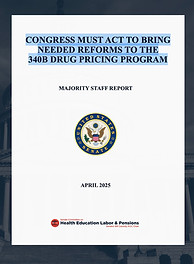
US Senate HELP Committee Investigation
“This investigation underscores that there are transparency and oversight concerns that prevent 340B discounts from translating to better access or lower costs for patients. Congress needs to act to bring much-needed reform to the 340B Program,” said Dr. Cassidy. “I look forward to continuing my efforts to bring transparency and improvements to the 340B Program.”

Pacific Research Institute
"The 340B program has gotten off track in recent years because ... covered entities can prescribe the discounted medicines purchased through the 340B program to anyone who receives medical care at their facilities, including patients who have insurance and pay full price for the medicines..."
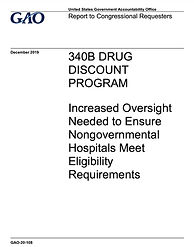
U.S. Government Accountability Office
'HRSA’s Processes Do Not Provide Reasonable Assurance That Participating Nongovernmental Hospitals Meet 340B Program Eligibility Criteria.'

State Treasurer of North Carolina
"Instead of using their discounts to benefit vulnerable communities, 340B hospitals expanded into wealthier neighborhoods with a higher percentage of insured individuals who could pay more for the drugs."

Citizens Against Government Waste
Published by Citizens Against Government Waste (CAGW), The 340B Drug Pricing Program Needs a New Prescription argues that the 340B program has grown far beyond its original purpose and lacks adequate transparency and oversight. The report calls for reforms to strengthen accountability, improve reporting, tighten eligibility standards, and ensure 340B savings are used to benefit the vulnerable patients the program was created to serve.